Pension in Your Sustainability Strategy
8 October 2026
Companies are switching to green electricity and electric vehicles, but they still pay too little attention to what happens to their employees’ pensions. Yet this is precisely where they can make a significant impact, say Tessa van Soest of B Lab Benelux (B Corp) and Jan Hein Rhebergen of pension provider BeFrank. “Pensions are, by definition, about the future.”
How sustainably are our pensions invested? In recent years, that question has increasingly come under the spotlight. Major pension funds such as ABP, PFZW and PME, as well as smaller players including the Pension Fund for General Practitioners and pension provider BeFrank, have already adopted more sustainable and responsible investment policies. ABP, the Netherlands’ largest pension fund, has been reducing its investments in the oil and gas sector for the past five years. In 2024, it tightened its criteria further and also divested from several US technology stocks, including Tesla, Alphabet and Meta. At the same time, ABP has placed stronger emphasis on sustainable energy and energy infrastructure, such as solar power, wind energy, green hydrogen, clean mobility and energy storage.
An Enormous Pool of Capital
These choices matter because the financial sector is crucial to achieving the Paris climate goals. To limit global warming to below 2°C, and preferably 1.5°C, not only must carbon emissions be reduced, but financial flows must also be aligned with that reduction. This includes pension investments, which represent an enormous pool of capital. In the Netherlands alone, the pension sector manages more than €1.6 trillion, according to figures from De Nederlandsche Bank. There are many obstacles on the road towards the Paris climate goals, but a lack of money is not one of them, says Tessa van Soest, Benelux Director at B Lab, the non-profit organisation behind the international B Corp certification. “The issue is that this capital is not always being deployed in the right way, namely to accelerate sustainable transitions.”
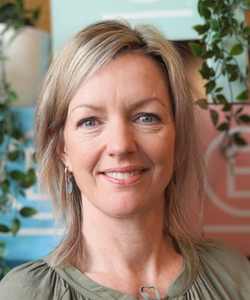
director Benelux B Lab
The Crucial Role of the Pension Sector
Because pension members generally have little say in how their contributions are invested, Van Soest believes the pension sector has a crucial role to play. This is even more important because most people rarely think about their pension in everyday life, let alone where their money is invested. “Your pension pot is ultimately a savings fund for later life, for the moment when you no longer need to work. How wonderful would it be if, when that time comes, your money has been invested sustainably rather than generating returns through activities that have worsened the climate crisis?”
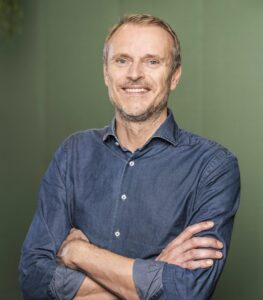
Building up a pension only makes sense if it also contributes to building a world in which people can genuinely enjoy living, adds Jan Hein Rhebergen. “Both now and in the future.” Rhebergen is Commercial Director at BeFrank, which administers pension schemes for more than 1,250 employers in the Netherlands, representing a total of 430,000 pension participants and more than €15 billion in invested capital. “Pensions are, by definition, about the future,” he says. “For our youngest members, retirement may still be fifty years away. What kind of world do we want to live in by then, and how can we use our position and the capital we manage to contribute to that future?”
The Champions League of Sustainability
With this philosophy in mind, BeFrank began its journey towards becoming a B Corporation, or B Corp, three years ago. B Corp is a global network of businesses that demonstrably contribute to a more inclusive and sustainable economy. The emphasis is on demonstrably, because certified companies must meet B Lab’s standards for social and environmental impact, transparency and responsible governance. Since February 2026, compliance has been independently verified by a third party. There are now more than 11,000 certified B Corps worldwide, including over 500 in the Netherlands. BeFrank became one of them in April 2024. “We were looking for an external and recognised audit,” says Rhebergen. “If, as a pension provider, we claim that sustainability should be an integral part of pension decision-making, we must also be prepared to measure ourselves against the highest standards. To me, B Corp certification is the Champions League of sustainability.”
Stringent Requirements
The financial sector remains relatively underrepresented within the network. Just over 7% of European B Corps operate in finance, while in the Netherlands the figure is around 6%. According to Van Soest, there are several reasons for this. “The standard has recently been updated, but historically it was more easily applied to service providers and manufacturing companies. Consumer brands, for example. Financial service providers do not have direct supply chains or factories, which meant that our framework did not naturally fit the sector as well.”
Although BeFrank is a subsidiary of NN Group, it has its own board, governance structure and strategic direction. This independence is important because B Corp certification places strict requirements on organisational and legal autonomy. “To become certified, a company must legally embed its social mission in its articles of association, ensuring that the mission remains protected even in the event of a leadership change or acquisition,” explains Van Soest. “We call this a mission lock.” Not every financial institution can meet this requirement. “Many financial brands are part of larger corporate groups and, unlike BeFrank, do not have that degree of independence.”
Green, Greener, Greenest
The number of financial institutions that truly distinguish themselves through sustainability is still relatively small. Alongside pension providers such as BeFrank and BrightPensioen, the B Corp network includes banks such as Triodos and Banque de Luxembourg, as well as impact investors such as Funds for Good and Fair Capital Partners. According to Van Soest, the common denominator among these organisations is where the money flows and, equally importantly, where it does not. “For example, we assess whether more than 1% of a company’s revenue comes from direct investments in so-called ineligible sectors, such as weapons, tobacco and fossil fuels. If it does, the company is not eligible for certification.”
BeFrank applies the same principle to its own investment policy. In addition, part of its assets is invested sustainably through green bonds, loans and bonds that are used exclusively to finance sustainable projects such as renewable energy initiatives. At the same time, the company does not want to impose choices on its customers. Employers and individual pension members remain in control of their own investment profile through three available options. Rhebergen says with a smile: “We call them green, greener and greenest.”
Helping Customers Make Informed Choices
Green is the starting point: a responsible minimum standard that excludes the polluting and controversial sectors mentioned earlier. The greener option combines that baseline with stricter sustainability criteria. The greenest option, developed in partnership with Triodos Investment Management, excludes fossil fuels entirely and directs investments specifically towards sustainable projects.
“I’m very proud that we offer that choice,” says Rhebergen. “We are not prescriptive and we do not point fingers. There is no single way to do good.” He does, however, believe it is essential that customers make informed decisions. That is why BeFrank developed a dashboard that allows pension members to see the tangible impact of their investment choices, expressed in measurable reductions in carbon emissions and waste. This year, BeFrank updated the dashboard so that the ESG scores of the investments are also visible. “We are equally transparent about the costs and risks associated with each option. Members should be able to take those factors into account.”
A tremendous impact
Van Soest praises that transparency. “A dashboard like this is a highly accessible way of engaging people more actively with their pension. We all see an amount deducted from our salary every month, but very few people stop to think about what that actually means or what happens to that money, which can add up significantly over time.” The same applies to employers, Rhebergen agrees. “At many companies, the focus is on switching to green electricity or electrifying the vehicle fleet. Those measures are all necessary. But not every employer yet realises that the pension scheme offers an opportunity to create an enormous amount of impact as well.”
This article appeared on MTsprout.nl on 30 September